
CONTENTS
-
CBN resets MPR to 23%
-
Inflation eases to 15.39%
-
Nigeria’s reserves rise to $55.25bn as economic growth accelerates
-
Nigeria returns to the FTSE Russell Frontier Market Index
-
Dangote refinery launches ₦2.15 trillion IPO
-
CBN and finance ministry strengthen fiscal-monetary coordination
-
CBN warns financial institutions about cybersecurity risks
-
CBN raises questions about buy now pay later credit offered by non-bank businesses
-
Borrow Smart, Grow Strong
CBN RESETS MPR TO 23%
Central Bank Reduces Benchmark Rate as Inflation Moderates and Financial Conditions Improve
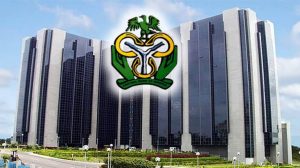
The Central Bank of Nigeria (CBN) has reset its benchmark Monetary Policy Rate (MPR) from 26.5 per cent to 23 per cent, following the conclusion of its 307th Monetary Policy Committee (MPC) meeting held on September 21st and 22nd, 2026.
The 350-basis-point reduction represents a significant adjustment to Nigeria’s monetary-policy framework. The Committee also recalibrated the Standing Facilities Corridor to +50/-300 basis points around the MPR, while retaining the Cash Reserve Requirement (CRR) at 45 per cent for deposit money banks, 16 per cent for merchant banks and 75 per cent for non-Treasury Single Account public-sector deposits.
The CBN explained that the decision was an operational realignment intended to strengthen monetary-policy transmission and restore the MPR as the principal signal of monetary policy. The Committee specifically noted that the adjustment should not, by itself, be interpreted as a change in the underlying monetary-policy stance.
The decision followed several improvements in Nigeria’s macroeconomic indicators. Headline inflation moderated to 15.39 per cent in August from 15.43 per cent in July,
while real GDP grew by 4.43 per cent in the second quarter of 2026. External reserves also reached $55.25 billion as of September 18.
The CBN said foreign-exchange pressures had receded considerably, while the country’s external position and investor confidence had strengthened.
The reduction in the benchmark rate has attracted attention from businesses and financial-market participants. Lower policy rates can, over time, influence borrowing costs and the pricing of financial assets, although the extent and speed of any impact on lending rates will depend on liquidity conditions, banks’ risk assessments and other market factors.
For investors, the adjustment could also influence the relative attractiveness and pricing of fixed-income instruments as market participants respond to changing interest-rate expectations.
The MPC stated that future decisions would remain data-dependent, with inflation, economic activity, exchange-rate conditions and financial-market developments continuing to guide monetary policy.
INFLATION EASES TO 15.39%

Consumer Price Growth Moderates for the Third Consecutive Month
Nigeria’s headline inflation rate declined marginally to 15.39 per cent in August 2026, compared with 15.43 per cent in July, according to the National Bureau of Statistics (NBS).
The August figure represents the third consecutive monthly decline in headline inflation.
Month-on-month inflation also moderated considerably, falling to 0.71 per cent in August from 1.57 per cent in July.
Food inflation declined to 19.57 per cent from 20.31 per cent in July, while core inflation, which excludes certain volatile components, moderated to 13.29 per cent from 14.97 per cent.
The moderation in inflation was one of the key developments considered by the Central Bank of Nigeria during its September Monetary Policy Committee meeting.
The CBN noted that the continued decline in inflation reflected the effects of earlier monetary-policy tightening, exchange-rate stability and improving inflation expectations.
Despite the moderation, inflation remains an important consideration for households and businesses. Higher prices continue to affect purchasing power, operating expenses and the cost of providing goods and services.
For businesses, the changing inflation environment makes budgeting, cash-flow management and cost control increasingly important. For individuals and investors, it also reinforces the need to consider the effect of inflation when planning savings and investments.
The latest figures indicate that the pace of price increases has slowed, but continued monitoring will be necessary to determine whether the moderation can be sustained.
NIGERIA’S RESERVES RISE TO $55.25BN AS ECONOMIC GROWTH ACCELERATES
Stronger External Buffers and Higher GDP Growth Improve Nigeria’s Macroeconomic Position
Nigeria’s gross external reserves rose to $55.25 billion as of September 18, 2026, their highest level in 18 years, according to the Central Bank of Nigeria (CBN). Reserves increased from $54.08 billion on September 3 to $54.61 billion on September 14, continuing the upward trend recorded throughout the year. The latest figure provides a stronger external liquidity buffer and is estimated to cover approximately 11.3 months of imports of goods and services.
The stronger external position has coincided with improved external-sector conditions. Nigeria’s current-account surplus increased by 67.92% from $4.49 billion in Q1 to $7.54 billion in Q2 2026, while the balance-of-payments surplus rose from $2.38 billion to $3.51 billion. The CBN also noted stronger external-sector fundamentals and improved investor confidence.
Meanwhile, Nigeria’s real GDP grew by 4.43% year-on-year in Q2 2026, up from 3.89% in Q1 and 4.23% in Q2 2025, bringing first-half growth to 4.16%, compared with 3.68% in H1 2025. Non-oil GDP growth accelerated to 4.31%, while oil-sector growth rose to 7.31%. Private-sector activity also remained in expansion territory, with the Composite PMI increasing to 52.7 points in August from 51.1 points in July.
However, the headline growth rate masks differences across sectors. The Manufacturers Association of Nigeria has raised concerns about relatively weak industrial-sector performance, highlighting the significant contribution of services to overall output. For businesses and investors, stronger reserves and economic growth provide a more supportive macroeconomic backdrop, but risks remain around oil revenues, capital inflows, remittances, import demand, productivity, infrastructure and global economic conditions.
NIGERIA RETURNS TO FTSE RUSSELL FRONTIER MARKET INDEX

Reclassification Places Nigerian Equities Back Within a Major Global Market Framework
Nigeria returned to the FTSE Russell Frontier Market universe on September 21, 2026, following its reclassification from Unclassified status.
The reclassification is an important development for Nigeria’s capital market because FTSE Russell’s global indices are tracked by international investors and investment funds.
The decision followed improvements in areas including foreign-exchange accessibility, market infrastructure and settlement processes.
The reclassification became effective at the market open on September 21. A number of Nigerian companies were included as eligible securities within FTSE Russell’s Frontier Index Series, spanning sectors such as banking, telecommunications, consumer goods, insurance, energy and other industries.
Nigeria’s return to the index comes at a time when the country’s financial markets are undergoing broader reforms aimed at improving transparency, accessibility and investor confidence.
Market visibility can be important in attracting international investors, although inclusion in an index does not automatically guarantee capital inflows. Actual investment decisions remain dependent on factors including market conditions, company performance, liquidity, regulatory developments and investor risk appetite.
For Nigeria’s capital market, the development provides an opportunity to increase international visibility and potentially broaden the investor base.
For businesses seeking long-term capital, a deeper and more accessible capital market can create additional avenues for raising funds and supporting expansion.
DANGOTE REFINERY IPO: SUBSCRIPTION WINDOW CLOSES OCTOBER 13
A major capital market opportunity is still open, but the clock is ticking.
The Dangote Petroleum Refinery’s ₦2.15 trillion Initial Public Offering (IPO), which opened on September 14, 2026, is currently attracting strong interest from investors. The offer comprises 4.1 billion ordinary shares priced at ₦525 per share, with a minimum subscription of 10 shares, valued at ₦5,250.
The IPO has generated significant attention since its launch, putting one of Nigeria’s biggest downstream energy businesses in the spotlight as it opens its ownership to the investing public.
But there’s something prospective investors should have on their radar: the subscription window closes on October 13, 2026.
If you’ve been following the IPO and have been thinking, “I’ll subscribe later,” there’s now limited time to do so. With the deadline approaching, investors who are interested in participating should review the offer details and complete their subscriptions before the offer closes.
Subscriptions can be made through SEC-licensed stockbrokers, commercial banks, approved fintech platforms and other official channels. Investors will need a valid Clearing House Number (CHN) and an active CSCS account.
Of course, an IPO is an investment and comes with its own risks. Before subscribing, take the time to understand the offer, consider the potential risks and make sure it aligns with your financial goals.
The deadline is October 13, 2026.
If you’ve been considering getting in, now may be a good time to stop putting it off and look into the subscription process before the window closes.
CBN AND FINANCE MINISTRY STRENGTHEN FISCAL-MONETARY COORDINATION
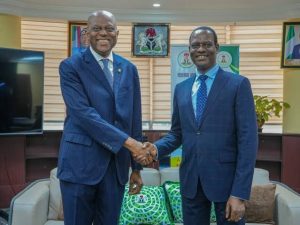
New Framework Seeks Greater Alignment in Managing Inflation, Borrowing, Liquidity and Economic Stability
The Central Bank of Nigeria and the Federal Ministry of Finance have signed a Memorandum of Understanding on Monetary-Fiscal Policy Coordination.
The agreement, signed in Abuja in September, is designed to strengthen cooperation between fiscal and monetary authorities in managing key areas of the economy.
The framework covers issues including inflation management, government borrowing, liquidity conditions, foreign-exchange developments and broader macroeconomic stability.
Fiscal policy involves government decisions relating to spending, taxation and borrowing, while monetary policy is primarily concerned with interest rates, money supply, liquidity and price stability.
Although the two areas are managed through different institutions, their effects on the economy are closely connected. Government borrowing and spending can influence liquidity and demand, while monetary policy affects the cost and availability of credit.
The formalization of coordination therefore provides a structured framework through which the Federal Ministry of Finance and the CBN can exchange information and coordinate their responses to economic developments.
The agreement comes at a time when Nigeria is working to sustain the recent moderation in inflation while supporting economic growth and maintaining financial stability.
For businesses and investors, greater policy coordination can improve understanding of the broader economic environment and help businesses make more informed decisions regarding financing, investment and expansion.
The effectiveness of the framework will ultimately depend on how consistently the institutions implement the agreed coordination mechanisms.
CBN WARNS BANKS AND FINTECHS OVER CYBERSECURITY RISKS
Financial Institutions Urged to Treat Cyber Threats as a Financial-Stability Issue
The Central Bank of Nigeria has warned banks, fintech companies and other financial institutions that cybersecurity threats, technology-vendor failures and business-continuity weaknesses can pose risks to financial stability.
The warning was delivered in September during the 19th Annual Banking and Finance Conference of the Chartered Institute of Bankers of Nigeria in Abuja.
The CBN noted that Nigeria’s financial system is becoming increasingly interconnected as banks, fintech companies, payment-service providers, cloud operators and other technology companies become more integrated into financial services.
This growing interconnectedness means that a disruption affecting one institution or technology provider could potentially affect other participants within the financial ecosystem.
The development highlights the growing importance of cybersecurity as financial services become increasingly digital.
For financial institutions, protecting customer information, payment systems and digital infrastructure is not only an information-technology responsibility but also an important component of risk management and customer confidence.
Businesses and consumers also have a role to play by protecting passwords, avoiding suspicious links, using secure payment channels and reporting unusual transactions promptly.
As Nigeria’s digital-finance ecosystem continues to expand, maintaining trust and resilience will remain an important priority for the financial sector.
CBN RAISES QUESTIONS ABOUT BUY NOW PAY LATER CREDIT OFFERED BY NON-BANK BUSINESSES
Regulator Highlights Licensing Questions Around Instalment Payment Schemes
The Central Bank of Nigeria has raised concerns about businesses that offer customers instalment payment options, often called “buy now, pay later” or “pay small small,” without being licensed to provide credit.
At Nigeria Fintech Week 2026 in Lagos, CBN Governor Olayemi Cardoso, represented by Abiodun Olalekan Okunola, Head of the Bank’s Innovation Management Division, said the growth of embedded finance is creating new questions for regulators. In particular, the line between an ordinary instalment sale and the provision of consumer credit can become unclear when a non-financial business lets customers take goods or services now and repay over time.
The comments draw attention to the need for appropriate oversight as more companies incorporate financing into their sales processes. For customers, a convenient payment plan still requires a careful look at the total cost, repayment dates, late-payment charges and the provider’s terms.
The CBN’s remarks raised regulatory questions; they were not an announcement that all buy now pay later arrangements have been banned. Financial institutions and businesses offering these products will need to follow any subsequent guidance from the relevant regulators.
BORROW SMART, GROW STRONG
Making financing work for you
A loan can help you stock up your business, buy equipment or take care of an important expense. But before you borrow, ask yourself: What do I need the money for, and can I comfortably repay it?
Look at the full cost of the loan, the repayment dates and what you already spend each month. The right loan should help you move forward without putting too much pressure on your budget.
At Centrum Finance, we help individuals and businesses find financing that fits their needs and plans.
Ready to take the next step? Let’s talk about your goals.
SOURCES: Nariametrics, Businessday, istock images, Shutterstock, Punch newspaper, Reuters, Guardian News, ICIR Nigeria, Premium Times, Leadership News, Vanguard News, Daily Times Nigeria, Linda Ikeji’s Blog, Finance in Africa, Daily Post, Terrapass, Agora Policy, Nairaland.
DISCLAIMER
This publication is produced by Centrum Finance Company Limited solely for the information of users who are expected to make their own investment decisions without undue reliance on any information or opinions contained herein. The opinions contained in the report should not be interpreted as an offer to sell, or a solicitation of any offer to buy any investment. Whilst every care has been taken in preparing this document, no responsibility or liability is accepted by any member of the Company for actions taken because of the information provided in this publication.