
CONTENTS
-
Nigeria’s Inflation Falls to 14.63% in September
-
Nigeria’s Growth Outlook Improves
-
Government Announces Measures to Cushion Rising Petrol Costs
-
More Cash Outside Banks
-
Reserves Rise, Naira Faces Pressure
-
J.P. Morgan Plans to Establish a Merchant Bank in Nigeria
-
Nigerian Stock Market Extends Losses
-
Why Food Prices Remain High
-
Three Financial Habits to Practice Before the Year Ends
THE ECONOMY
NIGERIA’S INFLATION FALLS TO 14.63% IN SEPTEMBER.
The slowdown offers a sign of easing price pressures, but food and energy costs remain a concern for households and businesses.
Nigeria’s headline inflation rate fell to 14.63% in September 2026, down from 15.39% in August, according to the National Bureau of Statistics (NBS). Released on 15 October, the latest Consumer Price Index report also showed a decline from the 20.98% recorded in September 2025.
The figures mark another step down in the rate of inflation. On a month-on-month basis, inflation slowed to 0.06% in September from 0.71% in August, indicating that average consumer prices rose much more slowly during the month.
However, a lower inflation rate does not automatically mean that life has become cheaper. It means prices are increasing more slowly overall. After several years of rising costs, many households are still paying considerably more for everyday essentials than they did previously.
Food prices illustrate this difference. Annual food inflation stood at 19.59% in September, slightly above the 19.57% recorded in August. Yet, on a month-on-month basis, food prices declined by 1.55%. The NBS linked the monthly movement to price changes in items such as rice, maize flour, eggs, onions, palm oil, tomatoes, potatoes and plantain.
In practical terms, some food items became cheaper between August and September, but the overall cost of food remained significantly higher than a year earlier. The relief is also unlikely to feel the same for everyone, as prices vary across states and markets.
There were mixed signals elsewhere in the report. Core inflation, which excludes certain volatile agricultural and energy prices, stood at 12.95% year-on-year. However, its month-on-month rate rose to 1.11% after recording a decline in August. The energy index also increased by 5.38% during September, keeping attention on costs that can affect transport, production and the delivery of goods and services.
The latest figures point to improving headline inflation, but they do not suggest that the cost-of-living challenge has disappeared. For households, the important question is whether prices will continue to stabilize and whether incomes can keep pace with essential expenses. For businesses, food, energy and operating costs remain important considerations in setting prices and planning expenditure.
The coming months will show whether September’s moderation can be sustained across more categories of goods and services. Until then, the decline in inflation is a welcome development, but one that needs to be viewed alongside the prices Nigerians continue to encounter in their daily lives.
NIGERIA’S GROWTH OUTLOOK IMPROVES

World Bank projects 4.3% growth in 2026, but better economic numbers must translate into better living conditions.
The World Bank projects that Nigeria’s economy will grow by 4.3% in 2026, up from an estimated 4.0% in 2025, before rising to an average of 4.4% in 2027 and 2028. The projections, published in the bank’s latest Nigeria Development Update, point to a gradual improvement in economic activity.
According to the report, Nigeria’s economy grew by 4.2% in the first half of 2026, driven mainly by services and agriculture. The World Bank also identified reforms, including the removal of petrol subsidies and foreign exchange liberalisation, as important to sustaining the country’s growth outlook.
The bank stressed the need for the government to maintain its reforms to support continued economic progress and help reduce inflation and poverty. It also reported that state revenues rose by about 93% in real terms between 2023 and 2025, while urging state governments to improve spending efficiency and invest more in human capital to raise living standards.
However, the forecast is not a guarantee. Insecurity, climate-related shocks, global financial pressures and disruptions to oil production could affect economic activity. The direction of government spending ahead of the 2027 elections may also influence the momentum of ongoing reforms.
For Nigerians, the distinction between economic growth and improved living standards remains important. Gross Domestic Product (GDP) measures the expansion of economic activity; it does not automatically mean that every household earns more, finds better employment or can afford essential goods and services more easily.
The challenge, therefore, is not only to sustain growth but to make its benefits more widely felt. More productive businesses, job creation, investment in infrastructure and stronger public services will be important in determining whether the improving outlook leads to meaningful changes in people’s daily lives.
Nigeria’s revised growth forecast is an encouraging signal, but the real measure of progress will be how consistently economic expansion creates opportunities and improves living conditions.
GOVERNMENT ANNOUNCES MEASURES TO CUSHION RISING PETROL COSTS

Proposed relief measures aim to ease pressure from higher energy prices, but their impact will depend on implementation.
The Federal Government has announced measures intended to cushion households and businesses against the impact of higher global crude oil and petrol prices. Among the measures reported, NNPC Retail said it would waive its retail profit margin and sell petrol at cost for a limited period. The government also considered a ₦1,350-per-litre ceiling on ex-gantry or landing costs, with excess costs to be recovered later when market conditions improve.
The proposals come amid concerns that higher international energy prices can quickly feed into domestic transport and distribution costs. Petrol is an important input across the Nigerian economy: it affects commercial transport, delivery services, small generators, agricultural logistics and the movement of goods between production centers and markets. When fuel costs rise, businesses may face pressure to increase prices or accept lower profit margins.
The potential effect of these measures will depend on implementation, duration and how quickly any reduction in costs reaches consumers. Retail pump prices may not adjust immediately because marketers can still be selling fuel purchased at earlier prices. Transportation, storage and other operating costs also influence the final price paid by consumers.
The proposed cost ceiling should not be described as an implemented nationwide pump-price cap unless this is confirmed by an official update. The distinction matters because a proposal or temporary intervention does not necessarily mean that every retailer or consumer will experience an immediate price reduction.
For households, fuel-price movements can affect transport fares and the prices of food and other essentials. For businesses, particularly those in logistics, manufacturing, retail and agriculture, energy costs are an important factor in budgeting and pricing decisions. Any sustained moderation in fuel costs could help ease operating pressures, although the extent of relief will vary across sectors and locations.
The development highlights the close relationship between international oil-market conditions and domestic economic activity. While temporary interventions may provide short-term support, longer-term stability will also depend on predictable energy supply, efficient distribution and market conditions that allow businesses and consumers to plan with greater certainty.
MONEY AND MONETARY CONDITIONS
MORE CASH OUTSIDE BANKS
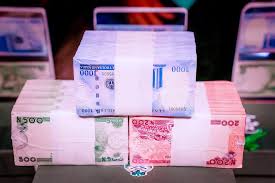
Cash holdings rise as Nigeria’s money supply expands, bringing financial management into focus.
Cash held outside Nigeria’s banking system rose to ₦4.92 trillion in September 2026, up from ₦4.87 trillion in August, according to monetary data from the Central Bank of Nigeria (CBN). The increase of approximately ₦48.73 billion represents a monthly rise of about 1%.
The increase coincided with a wider expansion in the country’s money supply. Broad money supply, known as M3, rose by 5.4% to ₦146.6 trillion in September, from ₦139.09 trillion in August. This measure covers money circulating in the economy across several forms, including physical cash and bank deposits.
These figures offer a snapshot of Nigeria’s monetary environment, but they do not tell the full story of why people are holding more cash outside banks. The increase alone does not mean Nigerians are abandoning digital payments or that spending has risen by the same amount. It shows how much physical cash was held outside the banking system during the period.
Changes in the wider money supply also matter because their effects on the economy depend on how the additional funds circulate and are used. Funds that support business activity, investment and production can contribute to economic growth. However, if spending increases faster than the supply of goods and services, it can add to inflationary pressure. This is one reason the CBN monitors monetary conditions alongside other economic indicators.
For individuals and businesses, the figures bring attention to how available funds are managed. Cash remains useful for daily transactions and unexpected expenses, while savings and other financial arrangements can help people prepare for future needs. The important consideration is having a clear understanding of what money is needed immediately and what can be set aside for longer-term plans.
For businesses, that balance is especially important. Having enough cash to pay suppliers, meet payroll and handle unforeseen costs can keep operations running smoothly. Keeping track of cash flow and separating day-to-day operating funds from longer-term reserves can also support better decisions.
The rise in cash holdings is one part of a much wider financial picture. What matters beyond the headline figure is how households, businesses and policymakers respond to changing monetary conditions, particularly while Nigerians continue to navigate the cost of living and the need to plan carefully with available resources.
RESERVES RISE, NAIRA FACES PRESSURE
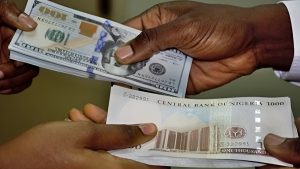
Nigeria’s stronger external reserves offer a buffer, but the naira remains sensitive to demand for dollars.
Nigeria’s foreign exchange position presents a mixed picture. The country’s external reserves strengthened considerably during 2026, yet the naira came under renewed pressure in October, showing that a stronger reserve position does not automatically translate into a stronger currency.
According to the Central Bank of Nigeria (CBN), gross external reserves stood at $55.25 billion as of 18 September, their highest level in 18 years. The reserves provide a financial buffer that can help Nigeria meet international payment obligations and manage external shocks. The CBN also reported that the country’s current account surplus rose to $7.54 billion in the second quarter of 2026, from $4.49 billion in the first quarter.
However, the naira weakened in October. On 22 October, the currency traded at around ₦1,339 per dollar on the official market, compared with ₦1,331 a week earlier, while street-market rates reached approximately ₦1,370. Reporting by Reuters attributed the pressure partly to seasonal demand for foreign currency from importers and profit-taking by investors.
The contrast highlights how the foreign exchange market works. Reserves indicate the strength of a country’s external financial buffer, but the naira’s daily value is also influenced by the availability of dollars, demand from businesses and individuals, capital flows and market expectations. Importers, for example, need foreign currency to pay for goods, equipment and raw materials purchased abroad. When demand rises faster than available supply, pressure on the exchange rate can follow.
For Nigerian businesses, exchange-rate movements can affect the cost of imported inputs, inventory and international payments. These costs may eventually feed into the prices paid by consumers. Individuals planning overseas education, travel or other dollar-denominated expenses can also feel the impact when the naira weakens.
Nigeria’s stronger reserves are an important development, but maintaining confidence in the currency will depend on more than the headline reserve figure. Consistent foreign exchange inflows, effective market management and a sustainable supply of foreign currency will remain important as the country works towards greater exchange-rate stability.
BANKING AND FINANCIAL SERVICES
J.P. MORGAN PLANS TO ESTABLISH A MERCHANT BANK IN NIGERIA

The proposed entry could expand specialized financial services for businesses, subject to regulatory approval.
J.P. Morgan plans to establish a merchant bank in Nigeria before the end of 2026, subject to regulatory approval. The plan follows steps to upgrade its Lagos office to a licensed operation. The proposed establishment would expand the global financial institution’s formal presence in the Nigerian market, although the final timeline and scope remain dependent on the relevant approvals.
Merchant banks typically provide services to businesses, institutional clients and other organizations, including corporate finance, capital raising, advisory services and other specialized financial solutions. Their activities differ from the everyday retail banking services used by individuals, although they can play an important role in connecting companies with financing and capital-market opportunities.
The proposed move is notable against the backdrop of Nigeria’s evolving financial services sector and the need for businesses to access capital, manage financial risks and fund expansion. The participation of international institutions can contribute to competition, specialized expertise and deeper connections between local businesses and international financial markets. The extent of any benefit will depend on the services offered, the clients served and the institution’s eventual operating model.
For Nigerian businesses, developments in merchant banking are worth watching because access to suitable financing and advisory support can influence investment decisions, expansion plans and participation in larger transactions. However, the announcement should not be interpreted as confirmation that the bank has already received its final license or commenced full operations.
The licensing process and any further announcements on capitalization, services and commencement of operations will be important indicators to monitor. Until approvals are confirmed, the proposed entry remains a planned development rather than a completed launch.
INVESTMENT AND THE CAPITAL MARKET
NIGERIAN STOCK MARKET EXTENDS LOSSES

Profit-taking weighs on share prices as investors reassess gains recorded earlier in the year.
The Nigerian stock market recorded another week of losses as investors took profits on previously acquired shares. According to a report by Vanguard, 55 listed companies recorded price declines during the week, while 20 stocks appreciated.
The Nigerian Exchange’s total market capitalization fell by more than ₦206 billion, closing at ₦160.519 trillion compared with ₦160.725 trillion the previous week. The All-Share Index also declined from 247,539.73 points to 247,222.27 points, reflecting the weaker overall market performance.
Despite the decline in share prices, trading activity increased by volume and value. Investors traded approximately 2.024 billion shares worth ₦110.773 billion during the week, compared with 1.659 billion shares valued at ₦98.088 billion in the preceding week. The financial services sector accounted for the largest share of trading volume, with 1.111 billion shares worth ₦53.908 billion traded across 81,787 deals.
The consumer goods sector followed, recording 394.039 million shares worth ₦9.811 billion in 17,912 deals. The agriculture sector ranked third, with 147.170 million shares worth ₦2.821 billion traded in 7,462 deals.
Market analysts attributed the continued weakness partly to profit-taking following substantial gains earlier in the year. When share prices have risen significantly, some investors sell portions of their holdings to secure profits. While this can contribute to short-term market declines, it does not necessarily mean that every listed company is performing poorly.
Rising international oil prices and geopolitical tensions in the Middle East also formed part of the wider market environment. Higher crude prices can support Nigeria’s export earnings and government revenue, but their effects on fuel costs, inflation and business expenses can influence investor expectations.
Analysts at InvestData Consulting Limited described the near-term outlook as cautious, noting that investors were balancing the need to preserve gains against opportunities in selected stocks. Continued selling pressure in banking, energy and other influential stocks could prolong the market’s consolidation, particularly if large-capitalization companies continue to weaken.
For investors, the latest performance is a reminder that share prices can fluctuate even after a strong period of growth. Market movements are best considered alongside a company’s financial performance, business prospects and an investor’s personal financial goals, rather than treated as a reason to make rushed decisions.
The market’s direction in the coming weeks will depend partly on investor confidence, the performance of major listed companies and broader economic developments. For now, the losses highlight the importance of understanding both the potential returns and the risks involved in equity investment.
FOOD AND AGRICULTURE
WHY FOOD PRICES REMAIN HIGH
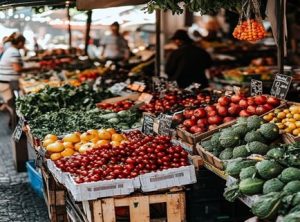
The harvest season has begun, but transportation, storage and farming costs continue to influence what Nigerians pay in the market.
Nigeria’s harvest season usually brings hope of improved food supply and lower prices. Yet, for many households, the arrival of fresh produce has not translated into meaningful relief. Food prices remain high, with the cost of transporting produce, expensive farm inputs, inadequate storage and insecurity continuing to affect the journey from farms to consumers.
A report published by Vanguard on 23 October highlighted concerns from farmers, traders and agribusiness operators that increased production alone would not guarantee affordable food. Produce must also be harvested, stored properly and transported efficiently to markets without excessive losses or additional costs.
The latest inflation figures show why the situation remains complicated. According to the National Bureau of Statistics, annual food inflation stood at 19.59% in September 2026, slightly above the 19.57% recorded in August. However, food prices declined by 1.55% month-on-month, following an increase in the previous month. This means some food items became cheaper between August and September, even though food remained significantly more expensive than a year earlier.
Transportation is one reason the benefit of a harvest may not reach consumers in full. Food produced in one part of the country often travels long distances to major markets. When fuel and logistics costs rise, traders may have to charge more to cover the expense of moving goods. The President of the All Farmers Association of Nigeria, Mohammed Magaji, identified higher transportation costs as a factor sustaining food prices during the harvest season.
Storage is another challenge. Perishable items such as tomatoes can spoil before they are sold, leaving traders with losses that may be reflected in the prices charged to customers. Meanwhile, farmers face the cost of seeds, fertilisers and other inputs, and insecurity in some farming communities can limit access to farmland or disrupt the movement of produce.
The impact is not the same across the country. NBS data showed that annual food inflation in September was highest in Lagos at 34.40%, followed by Imo at 33.79% and Ondo at 31.49%. Differences in supply routes, local production and market conditions help explain why consumers in different states can have very different experiences of food prices.
For households, the consequences are often felt in everyday decisions: buying smaller quantities, changing what goes into meals or using money originally intended for other expenses to cover food. For farmers and traders, rising costs can reduce profits even when demand remains strong.
Making food more affordable will require more than increasing harvests. Better rural roads, timely access to farm inputs, improved storage and processing, and safer farming and transport routes all influence how much produce reaches consumers and what it ultimately costs.
Nigeria’s harvest season can improve supply, but a reliable path from farm to market is essential if that improvement is to be reflected in the prices people pay.
MONEY MATTERS
THREE FINANCIAL HABITS TO PRACTISE BEFORE THE YEAR ENDS

As the year draws to a close, reviewing your finances can help you understand what you have achieved, what still needs attention and how best to prepare for the months ahead. These three habits are useful starting points.
- Review your spending.
Identify recurring expenses, unnecessary costs and areas where you can save without compromising essential needs. Looking back at your spending can help you understand where your money goes and identify adjustments that are realistic for your circumstances.
- Give your savings a purpose.
Separate money intended for emergencies, planned expenses and longer-term goals instead of treating every available balance as spending money. Whether you are preparing for the holidays, school fees, a business expense or a future investment, having a clear goal can make it easier to plan and track your progress.
- Understand your investment before committing.
Consider the expected return, investment period, access to your funds, applicable fees and risks. Avoid making financial decisions based solely on advertised returns. Take time to understand the terms and ensure the investment is suitable for your financial goals and circumstances.
Remember: sound financial decisions are not always about earning more. They are also about managing what you have, planning ahead and making informed choices.
At Centrum Finance, we believe informed financial decisions are an important part of sustainable growth. Whether you are managing personal finances or planning for your business, understanding the economic environment can help you make more deliberate choices.
Stay informed, plan ahead and keep your financial goals in view.
Centrum Finance
…Your Growth Partner.
SOURCES: Nariametrics, Businessday, istock images, Shutterstock, Punch newspaper, Reuters, Guardian News, ICIR Nigeria, Premium Times, Leadership News, Vanguard News, Daily Times Nigeria, Daily Post, The Sun Nigeria, Linda Ikeji’s Blog, Finance in Africa, Daily Post, Terrapass, Agora Policy, Nairaland.
DISCLAIMER
This publication is produced by Centrum Finance Company Limited solely for the information of users who are expected to make their own investment decisions without undue reliance on any information or opinions contained herein. The opinions contained in the report should not be interpreted as an offer to sell, or a solicitation of any offer to buy any investment. Whilst every care has been taken in preparing this document, no responsibility or liability is accepted by any member of the Company for actions taken because of the information provided in this publication.