

CONTENTS
-
CBN Rate Cut
-
Naira Strength Outlook
-
$1T Economy Goal
-
Dangote Petrol Supply
-
2026 Budget Passage
-
Oil Prices Steady
-
TIN Portal Success
-
Pension Fund Boost
-
Food Inflation Drop
-
Industrial Financing Plan
CBN RATE CUT
CBN Cuts Interest Rate to 26.5%, Signals Gradual Monetary Easing
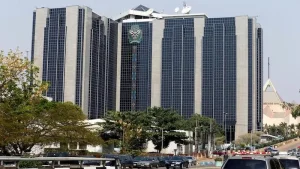
The Central Bank of Nigeria (CBN) has reduced its benchmark interest rate by 50 basis points to 26.5% at its February 2026 Monetary Policy Committee (MPC) meeting, marking the first rate cut after months of steady rates. The decision comes as inflation continues to ease, with headline inflation slowing to 15.10% in January 2026, representing the tenth consecutive monthly decline.
Governor Olayemi Cardoso explained that the measured rate cut reflects the MPC’s confidence that previous tightening measures are taking effect, coupled with improved exchange rate stability and increased food supply. “The decision was based on a balanced assessment of economic risks and the outlook for sustained disinflation,” he said.
The move lowers borrowing costs to their lowest level since mid-2024 and is intended to support economic growth while maintaining price stability. Key monetary parameters were retained:
- Cash Reserve Ratio (CRR): 45% for Deposit Money Banks, 16% for Merchant Banks, 75% for non-TSA public sector deposits
- Liquidity Ratio: 30%
- Asymmetric Corridor: +50 / -450 basis points around the policy rate
Analysts at the Financial Markets Dealers Association (FMDA) described the cut as a clear shift toward easing, noting that lower interest rates can increase the value of existing government securities, particularly long-term bonds, while also encouraging corporate borrowing and potentially boosting equity markets. Standard Chartered Bank’s chief economist for Africa and the Middle East, Razia Khan, observed that the 50-basis-point reduction was below market expectations of 100 points, reflecting caution amid global risks and oil price volatility.
However, challenges remain. Financial Derivatives Company CEO Bismarck Rewane highlighted that sustained naira appreciation is positive, but United Capital Plc’s chief economist Ayodele Akinwunmi and Centre for the Promotion of Private Enterprise CEO Muda Yusuf cautioned that high lending rates, elevated CRR, and structural rigidities could limit the real-sector impact of monetary easing.
Economic observers note that Nigeria still has room for further rate cuts later in the year if inflation continues its downward trend. President Bola Tinubu’s ongoing economic reforms, aimed at strengthening public finances and stimulating growth, are expected to complement the CBN’s measured approach to monetary policy.
NAIRA STRENGTH OUTLOOK
Naira Poised to Strengthen Amid Forex Inflows and Central Bank Dollar Sales
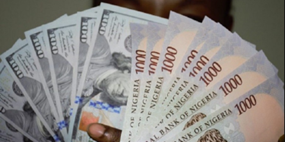
Nigeria’s naira is expected to maintain recent gains against the US dollar over the coming week, supported by strong foreign exchange inflows and active dollar sales by the Central Bank of Nigeria (CBN) to bureau de change operators.
On Thursday, the naira was quoted at ₦1,344 per dollar on the official market, up from ₦1,357 a week earlier. Parallel market trading saw the naira at ₦1,385 per dollar.
One trader commented, “We expect the naira to remain strong in the coming week, boosted by improved foreign exchange inflows and dollar sales to BDCs, which are helping to further reduce the parallel market premium.”
Traders also noted that the currencies of other regional economies, including Kenya, Ghana, Uganda, and Zambia, are likely to remain relatively stable.
$1T ECONOMY GOAL
FG Targets $1 Trillion Economy With 12% Annual Growth Under DGAS Framework

The Federal Government has unveiled a roadmap to achieve a $1 trillion economy, describing it as a measurable, actionable goal rather than a political slogan. Speaking at the 2026 Financial Correspondents Association of Nigeria (FICAN) Annual General Meeting in Abuja, the Honourable Minister of State for Finance, Dr Doris Uzoka-Anite, outlined that sustaining 10–12% GDP growth annually over the next decade will be key to reaching this milestone.
Currently, Nigeria’s GDP stands at approximately $375 billion. Dr Uzoka-Anite, represented by Amadi Uloma, Assistant Director of Information and Public Relations, noted that significant market reforms have restored investor confidence, citing the recent upgrade of Nigeria’s outlook to positive by S&P Global Ratings.
The Minister highlighted a two-wave reform strategy:
First Wave – Restoring Market Integrity:
- Removal of fuel subsidies (previously consuming over $5 trillion annually)
- Unification of the foreign exchange market
- Implementation of credible fiscal and monetary policies
Second Wave – DGAS Framework (Disinflation and Growth Acceleration Strategy):
A nine-pillar framework aimed at shifting Nigeria from a consumption-driven to a productive economy, covering:
- Industrialisation: Increasing domestic processing of raw materials (modeled on Dangote Refinery success)
- Infrastructure: Expanding broadband, data centres, and renewable energy programs
- Human Capital: Technical training for 3 million youths annually
- Consumer Credit: Improved access to housing, education, and healthcare financing
- Global Re-entry & Compliance: Enhancing international investor confidence following Nigeria’s exit from the FATF grey list
Dr Uzoka-Anite stressed that achieving the $1 trillion economy will rely on investor confidence, entrepreneurship, skills development for youth, and informed citizen engagement.
FICAN Chairman Mr Bassy Udo urged bold reforms, emphasizing that economic transformation requires strengthening macroeconomic fundamentals, improving policy transparency, and ensuring private sector participation in growth.
DANGOTE PETROL SUPPLY
Dangote Refinery to Supply Up to 65 million Litres of Petrol Daily, Ending Import Dependence

In a major shift for Nigeria’s downstream petroleum sector, the Dangote Petroleum Refinery & Petrochemicals will supply between 60 and 65 million litres of Premium Motor Spirit (PMS) daily to meet domestic fuel demand, positioning Nigeria for sustained fuel self-sufficiency while exporting surplus volumes.
President of the Dangote Group, Aliko Dangote, disclosed this in Lagos, confirming that structured offtake agreements have been concluded with selected marketers to ensure nationwide distribution and eliminate supply disruptions.
“We have agreed an offtake framework to supply up to 65 million litres daily for the domestic market. Any surplus, estimated at between 15 and 20 million litres, will be exported,” Dangote said.
Nigeria’s average daily petrol consumption is estimated at 50 to 60 million litres, meaning the refinery’s output exceeds current domestic needs. This represents a decisive break from decades of reliance on imported refined petroleum products and recurrent fuel scarcity.
Under a revised distribution framework approved by the Nigerian Midstream and Downstream Petroleum Regulatory Authority, nationwide supply will be handled through major marketing companies including:
MRS Oil Nigeria Plc, Nigerian National Petroleum Company Limited Retail, 11 Plc (Mobil), TotalEnergies Marketing Nigeria Plc, Rainoil Limited, Northwest Petroleum, Ardova Plc, Bovas & Company Limited, AA Rano Nigeria Limited, AYM Shafa Limited, Conoil, and Masters Energy.
The structured model is designed to eliminate supply bottlenecks and curb speculative practices that have historically caused market disruptions.
Industry analysts describe the development as a structural reform in Nigeria’s fuel supply chain. For decades, Africa’s largest crude oil producer depended heavily on imported fuel, exposing the economy to foreign exchange volatility and logistics risks.
With local refining now exceeding national demand, Nigeria stands to conserve billions of dollars annually in foreign exchange previously spent on fuel imports. This is expected to ease pressure on the naira, strengthen external reserves, and improve trade balance stability.
During a recent visit to the refinery, NNPC Group Chief Executive Officer, Engr. Bayo Bashir Ojulari, described the facility as a transformative national asset capable of redefining Nigeria’s energy security and accelerating industrial growth.
“This plant was designed for 650,000 barrels per day. None of us thought it would even reach 550,000. What we saw live today was 661,000 barrels per day. These are live operational parameters,” he said.
2026 BUDGET PASSAGE
Senate Sets March 17 for Passage of ₦58.47 Trillion 2026 Federal Budget
The Nigerian Senate has fixed March 17, 2026, as the tentative date for the final consideration and passage of the ₦58.472 trillion 2026 Appropriation Bill.
This was announced by the Senate Committee on Appropriations following a special session, which approved February 2–13, 2026 for committee-level consideration of budget estimates. A public hearing on the budget proposal was scheduled for Monday, February 9, 2026.
Chairman of the committee, Senator Solomon Olamilekan Adeola, disclosed that an interactive session with key economic managers of the Federal Government will take place on Thursday, March 5, 2026. Participants will include the Minister of Finance and Coordinating Minister of the Economy, Wale Edun, and the Minister of Budget and National Planning, Atiku Bagudu.
According to Adeola, February 16–23, 2026 was earmarked for the submission of reports on budget defence by Senate standing committees, ahead of the presentation of the Appropriations Committee’s final report on March 17.
Although Senate leadership initially preferred passage by March 12, Adeola said an additional week was requested to allow for more detailed scrutiny. Hard copies of the budget have been printed and distributed to committee members to aid thorough examination.
On December 19, 2025, President Bola Tinubu presented the ₦58.47 trillion 2026 budget proposal, titled “Budget of Consolidation, Renewed Resilience and Shared Prosperity,” to a joint session of the National Assembly.
The budget projects:
- Total revenue: ₦34.33 trillion
- Crude oil benchmark: $64.85 per barrel
- Production target: 1.84 million barrels per day
- Exchange rate: ₦1,400 per US dollar
Sectoral allocations include:
- Defence and security: ₦5.41 trillion
- Infrastructure: ₦3.56 trillion
- Education: ₦3.52 trillion
- Health: ₦2.48 trillion
The budget aims to support economic stability, infrastructure development, and social sector growth amid ongoing fiscal reforms.
TIN PORTAL SUCCESS
Joint Revenue Board Records 98% User Satisfaction with New National Tax ID Portal
The Joint Revenue Board (JRB) has reported that more than 98 percent of taxpayers who used the newly launched national Tax Identification Number (TIN) portal experienced a smooth and efficient process.
The disclosure was made in a press statement issued on February 23, 2026, titled “Taxpayers Thumbs-up New Tax ID Portal, as JRB Races on With Implementation of Tax Reforms.”
Launched on January 1, 2026, the portal serves as Nigeria’s centralized taxpayer database and is jointly managed by the JRB and the Nigeria Revenue Service. It enables individuals to generate a unique 13-digit Tax ID using their National Identity Number (NIN), while corporate entities can retrieve their TINs using their registration numbers from the Corporate Affairs Commission (CAC).
The initiative is a key component of President Bola Tinubu’s fiscal reform agenda, aimed at harmonising fragmented federal and state tax records into a single, secure national database to strengthen revenue administration and improve compliance.
A nationwide survey conducted by the JRB Help Desk, led by Mr. Effiong Abasifreke, assessed user experience across platforms including X, Facebook, Instagram, WhatsApp, and telephone interviews. Respondents were evaluated based on speed, ease of navigation, and overall convenience.
Survey results showed overwhelming approval from both individual and corporate users, with many praising the portal’s efficiency. Some users reported completing the process in less than 10 seconds, while corporate organisations such as Trinity Music Academy described the self-service interface as “fast and amazing.”
The Executive Secretary of the JRB, Mr. Olusegun Adesokan, encouraged all remaining taxpayers to adopt the platform, assuring the public that the system complies fully with regulations set by the Nigerian Data Protection Commission (NDPC).
He also dismissed concerns that the new framework would enable financial institutions to make arbitrary deductions from bank accounts, stressing that the tax reforms are designed to be “pro-poor and pro-growth,” with built-in incentives for low-income earners and small businesses.
As implementation continues across national and subnational levels, the JRB emphasised that centralised data coordination is essential for transparency, accountability, and effective revenue management.
The Board attributed the early success of the portal to strong public engagement and reaffirmed its commitment to building a modern, user-friendly revenue system that supports Nigeria’s broader economic and development objectives.
PENSION FUND BOOST
PenCom reforms could unlock up to ₦1.6 trillion for Nigerian equities by allowing higher pension fund investments in stocks.

A new investment regulation issued by the National Pension Commission (PenCom) could inject up to ₦1.6 trillion into the Nigerian stock market, giving equities a major liquidity boost in 2026.
The revised rules allow Pension Fund Administrators (PFAs) to allocate more of their pension assets to equities across key Retirement Savings Account (RSA) categories. Though technical in nature, the change has far-reaching implications for the capital market by giving PFAs greater flexibility to invest idle funds more efficiently.
What Has Changed
- RSA Fund I: Equity allocation increased to 35% (from 30%)
- RSA Fund II: Increased to 33% (from 25%)
- RSA Fund III: Increased to 15% (from 10%)
- RSA Fund VI (Active): Increased to 33% (from 25%)
These adjustments create fresh headroom for equity investments and could unlock substantial domestic liquidity into the stock market.
Market Impact
Based on PenCom’s December 2025 industry data, the new limits translate to about ₦1.6 trillion in additional investment capacity if PFAs gradually rebalance their portfolios.
This comes at a favourable time. The Nigerian Exchange Group All-Share Index is already up over 25% year-to-date as of February 2026, following an exceptional 50% gain in 2025. Large-cap stocks such as MTN Nigeria, Seplat Energy, and Dangote Cement have driven this rally, supported by stronger earnings and improved investor confidence.
Why Timing Matters
Macroeconomic conditions are improving. Inflation has moderated from previous peaks, foreign exchange markets are more stable, and business activity is picking up. At the same time, yields in the fixed income market are beginning to soften after a long tightening cycle, making equities more attractive to long-term institutional investors such as pension funds.
Dividend expectations further strengthen the outlook. Many listed companies posted improved margins in 2025, and dividend payouts in 2026 are expected to remain strong, offering attractive income opportunities in a lower-yield environment.
Bottom Line
PenCom’s revised regulation is more than a routine policy update. It introduces a structural driver of demand for equities. With potential pension inflows of ₦1.6 trillion, moderating bond yields, and stronger corporate earnings, Nigeria’s equities market is well positioned to outperform in 2026, provided macroeconomic stability is sustained.
INDUSTRIAL FINANCING PLAN
FG Commits 5% of GDP to Industrial Financing Under New Policy
The Federal Government of Nigeria has unveiled plans to channel up to 5% of Nigeria’s Gross Domestic Product (GDP) into industrial financing under the newly launched Nigeria Industrial Policy (NIP) 2025.
The policy, released by the Ministry of Industry, Trade and Investment, is designed to reposition the economy toward mass production, export competitiveness, and large-scale job creation through public–private partnerships.
What Government Is Saying
According to the policy document, financing is central to industrial transformation. The government plans to:
- Recapitalise the Bank of Industry (BoI)
- Expand sector-specific intervention funds
- Introduce credit guarantees for MSMEs
- Deploy innovative tools such as interest-drawback schemes and equity-based financing
By setting aside up to 5% of GDP for industrial funding, the government aims to match policy ambition with real financial resources.
Key Targets
- BoI recapitalisation to ₦3 trillion by 2026
- Sectoral intervention funds expanded to similar levels
- Manufacturing contribution to GDP to rise to 20–25% by 2030
Strategic Focus
The policy aligns with President Tinubu’s “Renewed Hope” agenda, prioritising:
- Local content development
- Import substitution
- Industrial self-sufficiency
- A “Nigeria First” procurement policy
- Value addition in priority sectors
It also introduces a structured implementation framework with clear timelines, performance targets, and institutional responsibilities.
Outlook
If effectively implemented, the Nigeria Industrial Policy 2025 could revive dormant factories, strengthen domestic manufacturing, and position Nigeria as a regional industrial hub, while generating millions of new jobs nationwide.
FOOD INFLATION DROP
Food Inflation Falls to 14-Year Low as Price Pressures Ease

Nigeria’s food inflation rate dropped to 8.89% year-on-year in January 2026, the lowest level in over 14 years, according to the latest Consumer Price Index report from the National Bureau of Statistics (NBS).
Headline inflation also eased slightly to 15.10%, down from 15.15% in December 2025, defying earlier projections that inflation would rise to 19%.
This marks the first single-digit food inflation reading in 128 months, and the sharpest turnaround since food inflation peaked at over 40% in mid-2024.
What Drove the Decline
The NBS attributed the slowdown mainly to lower average prices of staple food items including:
- Yam, beans, maize, cassava
- Eggs and beef
- Palm oil, groundnut oil, and soya beans
Food inflation fell dramatically from 29.63% in January 2025 to 8.89% in January 2026, a drop of more than 20 percentage points in one year.
Month-on-month, food prices declined by 6.02%, compared with just 0.36% in December.
Urban vs Rural Trends
- Urban inflation: 15.36% (down from 29.45% in January 2025)
- Rural inflation: 14.44% (down from 25.04%)
- Core inflation (excluding food and energy): 17.72%, also declining
Several states recorded sharp improvements, though price levels remain uneven across the country.
Private Sector Caution
While the figures show improvement, members of the Organised Private Sector warned against celebrating too early. They noted that although price increases have slowed, the cost of living remains high for most Nigerians.
Business leaders pointed to continued high prices of essentials such as cooking gas and rice, stressing that inflation relief has not yet translated into real purchasing power for households.
Outlook
The January data signals broad-based easing in price pressures, driven largely by food supply improvements and exchange rate stability. However, elevated 12-month averages show that the effects of earlier inflation spikes are still being felt across the economy.
SOURCES: Nariametrics, Businessday, istock images, Shutterstock, Punch newspaper, Reuters, Guardian News, ICIR Nigeria, Premium Times, Leadership News, Vanguard News, Daily Times Nigeria, Linda Ikeji’s Blog.
DISCLAIMER
This publication is produced by Centrum Finance Company Limited solely for the information of users who are expected to make their own investment decisions without undue reliance on any information or opinions contained herein. The opinions contained in the report should not be interpreted as an offer to sell, or a solicitation of any offer to buy any investment. Whilst every care has been taken in preparing this document, no responsibility or liability is accepted by any member of the Company for actions taken because of the information provided in this publication