
CONTENTS
-
Economic Growth
-
Finance Agenda 2026
-
Financial Scams Alert
-
Bank Recapitalisation Looms
-
Fintech Boosts GDP
-
Food Crisis Risk
-
Digital Divide Worsens
-
Fraud Risks Rising
-
Nigeria’s Economy Faces Critical Tests in 2026
Economy Growth:
IMF & World Bank Project Nigeria’s Fastest Growth in Over a Decade

Nigeria’s economy is expected to gather stronger momentum in 2026, with both the International Monetary Fund (IMF) and the World Bank projecting growth of 4.4 percent, marking the fastest pace in more than a decade. This growth is driven by ongoing economic reforms, improving macroeconomic stability, and sectoral expansion.
In its January 2026 World Economic Outlook (WEO) Update, the IMF forecasts that Nigeria’s economy will expand by 4.4 percent in 2026, up from 4.2 percent in 2025. The Fund attributes this improvement to sustained reform efforts, better macroeconomic coordination, and continued growth in the services sector. Growth across Sub-Saharan Africa is expected to strengthen to 4.6 percent in 2026 and 2027, supported by stabilisation measures and structural reforms in major regional economies. Globally, the IMF projects growth of 3.3 percent in 2026 and 3.2 percent in 2027, noting that high-tech sector slowdowns are cushioned by other areas, and while trade tensions remain headwinds, their drag is expected to ease gradually.
The World Bank also projects 4.4 percent growth for Nigeria in 2026 and 2027, following a 4.2 percent growth in 2025 driven by expansion in services, finance, ICT, a modest recovery in agriculture, and Nigeria’s emergence as a net exporter of refined petroleum products. Growth in 2026 is expected to be supported by:
- Continued expansion in services
- Rebound in agricultural output
- Modest acceleration in non-oil industrial activities
- Ongoing tax reforms and prudent monetary policy
Higher oil output is expected to offset lower global oil prices, strengthening fiscal revenues and external balances. Across Sub-Saharan Africa, the Bank projects 4.3 percent growth in 2026, supported by easing inflation and domestic investment, though fiscal pressures, elevated debt levels, and external shocks remain risks.
Risks to Nigeria’s outlook include weaker global demand, commodity price volatility, political instability, rising debt-servicing costs, and declining donor support. Both institutions caution that headline growth may not immediately translate into widespread prosperity, as per capita income gains remain insufficient to significantly reduce poverty or generate enough jobs.
Bottom line: Nigeria’s growth outlook is improving, backed by reforms and a resilient services sector, but the key challenge remains translating macroeconomic gains into broad-based welfare and job creation.
Finance Agenda 2026
Ministry of Finance Unveils Strategy to Move from Stabilization to Growth.

The ministry of finance says it will establish a central investor desk and deepen partnerships with banks and financial technology firms (fintechs) as part of its strategy to accelerate growth, mobilise investment, and expand access to credit in 2026.
The plan, anchored under the 2026 growth agenda of the federal ministry of finance, is aimed at moving Nigeria’s economy from stabilisation to expansion after two years of economic reforms implemented under the President Bola Tinubu administration.
In a statement on Thursday, Doris Uzoka-Anite, minister of state for finance, said 2026 will mark a transition phase focused on scaling output, deepening domestic value creation, and placing the economy on a path towards a $1 trillion gross domestic product (GDP) by 2036.
“That aspiration will be achieved by domesticating key supply chains to use raw materials, a workforce, and intellectual property sourced competitively from Nigeria in line with the Nigeria First Policy launched by President Bola Ahmed Tinubu, and building an open, export-oriented economy with strong domestic aggregate demand.”
“Our focus is to move decisively from stabilization to growth. The reforms underway are designed to lower risk, unlock private capital, and ensure that Nigeria delivers sustainable returns for investors while expanding opportunity for our citizens.”
According to the minister, the 2026 economic strategy will be anchored on three pillars: macroeconomic predictability, clear sectoral investment pathways, and disciplined policy execution, to strengthen investor confidence.
Priority sectors identified for growth include energy and gas-based industrialisation, agribusiness, manufacturing, housing, healthcare, digital services, creative industries, logistics, and solid minerals.
On capital formation, Uzoka-Anite said the federal government will advance reforms to deepen Nigeria’s capital and insurance markets by expanding long-tenor local currency instruments, improving market liquidity, and strengthening investor protections to support infrastructure, housing, and productive sector financing.
To ensure broad-based growth, she said the government will prioritise consumer credit expansion and financial inclusion.
The minister said the government will also be working with the central bank, commercial banks, microfinance institutions, fintechs, and credit guarantee schemes to deepen access to affordable credit for households and microenterprises.
“That will enable the market to deploy innovative, targeted risk-sharing instruments, wholesale funding lines, and digital credit infrastructure to expand responsible consumer lending on an industrial scale,” she said.
“Emphasis will be placed on enabling, qualifying and supporting responsible use of credit among first-time borrowers, women- and youth-led enterprises, and underserved communities.”
Uzoka-Anite, speaking on revenue mobilisation, said the government will strengthen non-oil revenue performance through improved compliance, digital revenue systems, and enhanced transparency across federal agencies.
She announced that the new federal revenue optimisation platform (RevOps) will be rolled out across ministries and agencies from January 1, 2026, with electronic receipts becoming the sole recognised proof of payment for federal services.
To deepen investor engagement, the politician said a central investor desk will be established within the ministry to serve as a single interface between the government, domestic and foreign investors, DFIs, credit rating agencies, and market analysts.
“The core function will be to ensure consistent communication, timely disclosure and proactive engagement around the country’s macroeconomic outlook, policy reforms, investment priorities and execution progress,” the minister said.
“These engagements will focus on building robust investment pipelines, deploying blended finance solutions, and accelerating the execution of bankable projects across priority sectors.
“That desk will also coordinate closely with the DGAS team that is implementing our central investment thesis to build a private sector-led economy.
“We will operationalise DGAS implementation and launch the development finance strategy with the CBN and other partners in Q1 2026, to give greater clarity to the policy implementation pathways.”
Uzoka-Anite said the incumbent administration remains committed to difficult but necessary reforms, adding that consistent delivery, transparency, and inclusive growth are central to restoring confidence and improving the lives of Nigerians.
Financial Scams Alert
EFCC Flags Banks and Fintechs Over ₦162bn Scams
Nigeria’s financial system has come under renewed scrutiny after the Economic and Financial Crimes Commission (EFCC) revealed that several banks and fintech companies were used as channels for large-scale financial scams involving over ₦162 billion.
At a press briefing in Abuja, EFCC Director of Public Affairs, Wilson Uwujaren, disclosed that a new-generation bank, six fintech firms, and some microfinance banks allegedly failed to carry out proper customer checks, allowing fraudsters to launder massive sums through the financial system during the 2024–2025 financial year.
According to the EFCC, weak compliance with Know Your Customer (KYC) and Customer Due Diligence (CDD) rules enabled criminals to convert illicit funds into digital assets, particularly cryptocurrencies, and move the proceeds beyond reach.
Uwujaren revealed that investigations uncovered cryptocurrency transactions worth ₦162 billion processed without adequate scrutiny by one new-generation bank alone. In another case, a single customer reportedly operated 960 bank accounts, all linked to fraudulent activities.
He noted that while the scale of the fraud is troubling, EFCC intervention has led to the recovery of ₦33.62 million, which has already been returned to some victims.
Two Major Scam Schemes Uncovered
The EFCC identified two major scam operations.
The first involved an airline ticket discount scheme, where fraudsters advertised heavily discounted tickets for a foreign airline. Victims were led to believe payments were going directly to the airline. However, once payment was made, the fraudsters allegedly emptied the victims’ entire bank accounts.
Investigations show that over 700 victims fell for the scheme, resulting in losses estimated at ₦651 million. The EFCC disclosed that the operation was allegedly masterminded by a foreign national, with part of the stolen funds already recovered and returned to victims.
The second scheme involved a company known as Fred and Farid Investment Limited (FF Investment), which ran a bogus investment operation promising attractive returns. According to the EFCC, more than 200,000 Nigerians were defrauded, with losses totaling ₦18 billion.
Funds were reportedly routed through nine companies, including Credio Banco Limited, Deliberty Rock Limited, Liam Chumeks Global Service, Ngwuoke Daniels Technology, Icons Autos and Import Merchant, Newpace Technology Services Limited, Primepath Ways Ventures Limited, Kaka Synergy Network Limited, and Sunlight Tech Hub Services Limited.
While foreign nationals are believed to be the masterminds behind the schemes, the EFCC confirmed that three Nigerian accomplices have been arrested and charged to court, while efforts continue to track down the main suspects.
In response to the revelations, the EFCC has called on regulators to enforce mandatory compliance with anti-money laundering standards across the financial sector.
Uwujaren warned that banks, fintechs, and microfinance institutions found to be aiding or ignoring fraudulent activities should face suspension, investigation, and possible prosecution. He stressed that negligence in monitoring suspicious or structured transactions must no longer be tolerated.
The EFCC also urged the public to remain vigilant and encouraged financial institutions to strengthen internal controls to prevent further abuse of Nigeria’s financial system.
Bottom line: The scale of the scams highlights growing risks within Nigeria’s increasingly digital financial ecosystem and underscores the urgent need for stronger compliance, tighter oversight, and greater accountability across banks and fintech platforms.
Bank Recapitalisation Looms
Three major bank mergers expected by Q1 2026 to meet CBN’s ₦500bn recapitalisation requirement.
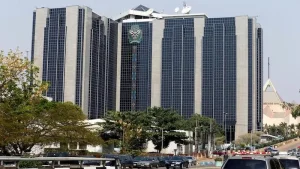
Nigeria’s banking sector is heading into a decisive period, with at least three major bank mergers expected by the first quarter of 2026, as lenders race to meet the Central Bank of Nigeria’s (CBN) March 31 recapitalisation deadline, according to DataPro Limited.
In its report, Banking Sector Prospects in Nigeria, the credit rating agency described the industry as being at a critical inflection point, shaped by a combination of tighter regulation, capital pressure, and rapid technological disruption.
DataPro’s Enterprise Risk Management analyst, Idris Shittu, referred to these forces as a “triple threat” that will determine which banks emerge stronger and which are forced to consolidate.
Big Banks Ready, Tier-2 Banks Under Pressure
By the end of 2025, top-tier banks including Access Bank, Zenith Bank, GTCO, UBA, First Bank, and Stanbic IBTC had already met the ₦500 billion minimum capital requirement set by the CBN.
However, pressure is mounting on Tier-2 banks, many of which are still working to close capital gaps ahead of the March 2026 deadline. DataPro expects this urgency to translate into three significant mergers as weaker institutions seek survival through consolidation.
The recapitalisation policy, introduced by the CBN in March 2024, has already triggered an active mergers and acquisitions (M&A) environment across the sector, with over 20 banks reportedly compliant so far.
Mergers Bring Risks Alongside Relief
While consolidation may help banks meet regulatory requirements, DataPro warned that post-merger integration risks could strain newly combined entities. Key challenges include:
- IT system harmonisation
- Cultural alignment between merging institutions
- Migration and management of non-performing loans (NPLs)
According to the report, many banks are now operating in “war room mode,” focused on deal execution, risk mitigation, and operational continuity as the deadline approaches.
Liquidity Tight, Lending Constrained
The recapitalisation drive comes at a time of severe liquidity constraints in the banking system. With the Cash Reserve Ratio (CRR) at 45 percent, nearly half of banks’ naira deposits remain sterilised at the CBN.
DataPro noted that this has significantly limited banks’ lending capacity, pushing institutions to rely more heavily on fee-based income rather than traditional credit creation.
Fintech Competition Forces Strategic Shift
Beyond regulatory pressure, banks are also contending with aggressive fintech competition, particularly from players like Moniepoint and OPay, which continue to gain ground among SMEs and retail customers.
In response, DataPro predicts that 2026 could mark the year Nigerian banks evolve into digital “super-apps”, integrating services such as flight bookings, food delivery, and other lifestyle offerings directly into banking platforms to deepen customer engagement.
However, the agency cautioned that legacy core banking systems and slow IT procurement processes could undermine these ambitions, increasing the risk of customer migration to faster, more agile fintech platforms.
To remain competitive, banks may increasingly turn to fintech acquisitions or the creation of independent digital subsidiaries, allowing them to innovate more rapidly outside traditional banking structures.
Drawing lessons from past consolidation exercises, particularly the 2005 banking reforms, DataPro warned that IT failures and cultural clashes remain major risks if mergers are poorly executed.
Fintech Boosts GDP
Digital Payments and Fintech to Add $6 Billion to GDP in 2026

Nigeria’s fintech and digital payments sector is set to contribute approximately $6 billion to the nation’s GDP in 2026, as overall real GDP growth is expected to reach 4.4 per cent, according to EnterpriseNGR’s 2026 Macroeconomic Outlook, produced in collaboration with EY. The report describes fintech as the backbone of Nigeria’s digital economy and a major engine for inclusive and sustainable growth.
The outlook highlights Nigeria’s position as Africa’s leading fintech hub, with digital payment platforms processing ₦1.08 quadrillion in 2024, a 79% year-on-year increase. By 2026, digital payments, lending, wealthtech, and insurtech services are projected to drive substantial GDP gains, supported further by the Central Bank of Nigeria’s Open Banking guidelines, expected to come into effect in 2026. These reforms are expected to unlock innovations in credit scoring, personalised wealth management, and insurance products.
EnterpriseNGR anticipates consolidation in the fintech ecosystem, as larger players pursue mergers and acquisitions to expand infrastructure and scale operations. Notable early moves include Flutterwave’s acquisition of Mono and Paystack’s acquisition of Ladder Microfinance Bank, signaling a broader trend.
The report emphasizes the need for coordinated regulatory support from both the CBN and the SEC, particularly under the Investments and Securities Act 2025, which provides a clear legal framework for digital assets. RegTech solutions are expected to strengthen anti-money laundering (AML), KYC, and consumer protection measures, enabling fintech companies to scale securely and support broader financial inclusion, particularly in rural areas.
Beyond fintech, Nigeria enters 2026 with renewed macroeconomic stability. By the end of 2025, inflation had eased to 15.15%, foreign exchange liquidity improved, external reserves reached $45.5 billion, and capital market capitalization surpassed ₦100 trillion. EnterpriseNGR CEO Mrs. Obi Ibekwe noted that the foundations for stability have been laid, and the next priority is translating reform gains into sustainable growth, investment, and improved welfare.
The report identifies three key pillars for the Financial and Professional Services (FPS) sector:
- Innovation in technology and business models.
- Integration across banking, insurance, pensions, and other sub-sectors.
- Impact, by channeling financial services to productive sectors such as manufacturing, agriculture, and infrastructure.
Notably, non-oil sectors now contribute over 96% of Nigeria’s GDP, led by services, financial intermediation, telecommunications, trade, and industry—a clear shift from oil dependence. The report also highlighted opportunities in critical minerals such as gold and lithium, which could integrate Nigeria into emerging global value chains linked to energy transition and technology-driven investments.
On the foreign exchange front, EnterpriseNGR recommended deepening ongoing reforms to maintain market confidence. Nigeria recorded a net FX inflow of $15.2 billion in Q1 2025, reflecting improved transparency, although pressures from reserve drawdowns and global trade uncertainties persist.
EnterpriseNGR projects that real GDP growth of 4.4% in 2026 will be supported by services-led expansion, stronger financial intermediation, and improved FX conditions. However, the report cautions that stability is conditional on managing global geopolitical risks, oil price volatility, food supply challenges, infrastructure gaps, and security concerns.
Conclusion: Nigeria’s Financial and Professional Services sector is well-positioned to drive innovation, consolidation, and inclusive growth, playing a central role in achieving the country’s $1 trillion economy ambition by 2030.
Food Crisis Risk:
One Million Nigerians at Immediate Risk
The World Food Programme (WFP) has warned that at least one million Nigerians could face a food crisis within weeks if emergency funding is not secured, describing the situation as one of the worst in recent memory. The crisis is exacerbated by renewed violence in the north, which has devastated rural communities, displaced families, and destroyed local food reserves.
David Stevenson, WFP’s Nigeria Country Director, said:
“If WFP cannot continue supporting displaced populations in camps, they will leave in desperation, potentially migrating or joining insurgent groups to survive. Humanitarian solutions remain one of the last stabilizing forces preventing mass displacement and regional spillover. Now is not the time to stop food assistance.”
The WFP projects that nearly 35 million Nigerians could experience acute or severe food insecurity during the lean season, including roughly 15,000 people in Borno at risk of catastrophic hunger, a stage just short of famine. The agency is urgently seeking $129 million to sustain operations in the northeast over the next six months. Without immediate funding, vital food assistance programs may shut down, triggering catastrophic humanitarian, economic, and security consequences.
Digital Divide Worsens
Over 20 million Nigerians remain offline, largely in rural areas.

Nigeria’s persistent digital divide continues to exclude millions from economic participation, with over 20 million Nigerians lacking access to modern digital connectivity, according to industry experts and the Nigerian Communications Commission (NCC).
While major cities such as Lagos, Abuja, Port Harcourt, Kano, and Kaduna enjoy relatively advanced internet infrastructure, over 70 percent of rural communities remain digitally excluded. NCC data shows internet penetration stands at 57 percent in urban areas, compared to just 23 percent in rural regions, leaving 77 percent of rural Nigerians without reliable access.
Experts warn that rising telecom taxes, high deployment costs, vandalism of infrastructure, and dwindling rural incomes are worsening the problem. According to Omobayo Azeez, Convener of the RuralConnect Summit, “Digital transformation cannot be said to be successful if millions of Nigerians in rural areas remain cut off.”
Despite Nigeria’s ICT Development Index improving from 46.9 in 2024 to 52.9 in 2025, usage remains heavily concentrated in urban centres, which account for nearly 80 percent of total data consumption nationwide. Meanwhile, Nigeria’s broadband penetration stands at 48.81 percent, below Africa’s average of 56.1 percent and far behind the global average of 77.6 percent.
NCC Executive Vice Chairman, Dr. Aminu Maida, described the digital divide as a barrier to education, healthcare, financial inclusion, and economic empowerment. He noted that every 10 percent increase in broadband penetration could raise GDP by 1.38 percent in developing economies.
To address the gap, the NCC introduced the Nigeria Digital Connectivity Index (NDCI) in October 2025, which will rank states annually based on digital readiness. The Commission has also proposed a General Authorisation Framework to allow pilot deployment of satellite internet and low-cost 5G solutions in underserved areas.
In a major boost, the Federal Government recently granted seven-year satellite permits to Amazon’s Project Kuiper (Amazon Leo), BeetleSat, and Satelio IoT Services, allowing them to operate alongside SpaceX’s Starlink, which already has over 66,500 subscribers in Nigeria.
Industry leaders warn that unless Nigeria urgently closes its digital access gap, the country risks missing out on the rapidly expanding global AI economy projected to hit $15.7 trillion by 2030.
Economic Risks Ahead
CBN Raises Alert on Evolving Fraud Risks in Banking and Payments Sector

The Central Bank of Nigeria (CBN) has warned of increasingly sophisticated fraud in the banking and digital payments ecosystem. Speaking at the 2026 Nigeria Electronic Fraud Forum (NeFF), Deputy Governor Philip Ikeazor highlighted emerging threats such as social engineering, SIM-swap abuse, insider compromise, and Authorised Push Payment (APP) scams.
Achievements in combating fraud include:
- Nationwide adoption of EMV chip-and-PIN cards
- Two-factor authentication and improved transaction monitoring
- Centralized fraud reporting and BVN-NIN linkage
CBN aims for fraud response times under 30 minutes, leveraging real-time data analytics and shared intelligence across the industry.
Rakiya Yusuf, CBN Director of Payment Systems Supervision, emphasized the need for:
- Standardized frameworks for fraud prevention
- Faster interventions and proactive analytics using ISO 20022 messaging standards
Premier Oiwoh, CEO of NIBSS, reported a significant reduction in electronic payment fraud in 2025, despite a surge in transaction volumes, attributing improvements to coordinated regulatory and industry efforts.
Challenges remain, particularly on internet banking and e-commerce platforms, with insider-assisted fraud and social engineering posing persistent risks. Advanced AI-based monitoring tools and a new national payment infrastructure are being developed to strengthen prevention while supporting financial inclusion.
Fraud Risks Rising
CBN Reports Higher Credit Amid Rising Loan Defaults in Q4 2025
The Central Bank of Nigeria (CBN) has noted an improvement in credit availability across households and corporate borrowers in Q4 2025, even as lenders recorded higher loan default rates, according to its latest Credit Conditions Survey.
Key Findings:
- Households: Borrowing costs rose, with spreads on secured and unsecured loans widening to -10.8 and -2.0 index points relative to the Monetary Policy Rate (MPR).
- Corporate Loans:
- Small businesses, large private non-financial corporations (PNFCs), and other financial corporations (OFCs) experienced narrower spreads.
- Medium-sized PNFCs faced tighter lending conditions with a -4.8 index point spread.
- Defaults: Loan defaults increased across secured, unsecured, and corporate categories, reflecting ongoing repayment challenges.
Earlier in November 2025, private sector credit reached N74.63 trillion, slightly up from October’s N74.41 trillion, suggesting early recovery following the CBN’s September MPR cut to 27%. While credit supply is improving, heightened default risks remain a concern.
The CBN emphasized that these trends reflect the delicate balance banks must maintain between expanding access to credit and managing growing credit risk, particularly under ongoing macroeconomic pressures like inflation and rising operational costs.
Nigeria’s Economy Faces Critical Tests in 2026:
CEOs and Economists Warn

Top business leaders, economists, and capital market operators have warned that Nigeria’s economy in 2026 stands at a crossroads. While recent reforms have stabilized macroeconomic indicators, immediate risks—insecurity, volatile oil prices, pre-election fiscal pressures, and global shocks—could easily undermine gains.
Wole Adeniyi, CEO of Stanbic IBTC Bank, stressed:
“This is the year when reforms must leave policy documents and enter people’s lives. Otherwise, public patience will wear thin, and the fragile recovery could stall.”
CBN Forecasts and Macro Assumptions
The Central Bank of Nigeria (CBN) projects:
- GDP growth: 4.49%
- Inflation: 12.4%
- External reserves: $51.04 billion
Assumptions underpinning these projections include crude oil at $55/barrel, domestic production of 1.5 mbpd, Naira at N1,400/USD, PMS prices around N950/litre, and stable monetary policy (MPR 27%, CRR 45%).
From Shock Therapy to Stabilisation
Nigeria has endured high inflation, exchange rate swings, fuel subsidy removal, monetary tightening, and tax reforms. By late 2025, however, signs of macro-stability emerged: moderated inflation, relative FX stability, increased crude production, and stronger reserves.
Oluropo Dada, CIS President, described this as a cautious turning point, noting that global factors like commodity prices and geopolitical risks continue to influence domestic stability.
Growth Outlook
Economic growth for 2026 is projected between 3.1% and 4.5%.
- Optimistic scenarios: 4.0–4.5% if reforms continue and security improves (Dr. Muda Yusuf, CPPE).
- Moderate scenarios: ~3.5%, reflecting gradual reform implementation (Wole Adeniyi).
Non-oil sectors, manufacturing, refining, agriculture, trade, and services, are expected to drive growth alongside oil. The Dangote Refinery is cited as a major catalyst, potentially adding 1.5 percentage points to non-oil GDP growth.
Inflation, Interest Rates, and FX
- Inflation: Expected to trend down to ~16.5–17.4% by year-end.
- Interest Rates: Monetary easing is likely; MPR could fall by up to 300 basis points in the first nine months.
- FX Stability: A stable Naira is prioritized over a strong Naira to maintain investor confidence and avoid volatility.
Fiscal Policy and Risks
The fiscal deficit may reach N20.5 trillion (4.4% of GDP) due to higher spending and pre-election commitments. Experts warn that insecurity, high debt service costs, and geopolitical risks could strain fiscal discipline.
Capital Markets and Investor Confidence
Capital markets could benefit from global growth trends (AI, climate transition, demographic shifts), but FX instability and security concerns remain key risks. Tax policy and fiscal prudence will play central roles in shaping long-term investor confidence.
Inclusivity and Living Standards
Experts stress that reforms must translate into inclusive growth, creating jobs and improving living standards. Business leaders emphasize that stability, predictable policies, and finalizing pending fiscal measures will determine whether Nigerians feel the benefits of reform.
SOURCES: Nariametrics, Businessday, istock images, Shutterstock, Punch newspaper, Reuters, Guardian News, ICIR Nigeria, Premium Times, Leadership News, Vanguard News, Daily Times Nigeria, Linda Ikeji’s Blog.
DISCLAIMER
This publication is produced by Centrum Finance Company Limited solely for the information of users who are expected to make their own investment decisions without undue reliance on any information or opinions contained herein. The opinions contained in the report should not be interpreted as an offer to sell, or a solicitation of any offer to buy any investment. Whilst every care has been taken in preparing this document, no responsibility or liability is accepted by any member of the Company for actions taken because of the information provided in this publication